Tuesday, 27 June 2023

ENGLISH LITERATURE 1 - "Poetry Makes my Toes Tingle!"


ENGLISH LITERATURE 1 - "Poetry Makes my Toes Tingle!"


    INSTRUCTIONS: 

   1. Explore the following websites : 

https://poetryarchive.org/poet/john-donne/

https://www.poetryfoundation.org/poets/john-donne

 2. Read John Donne's poems and chose 2-3 lines that you liked because of...

a) the meaning; 

b) his style ( conceits, imagery, use of words); 

c) the rhythm or musicality of the lines; 

e) what they made you feel and why. 

3.Write the lines you have chosen in the comments below. Use the proper punctuation, i.e., the lines should be enclosed between inverted commas "....", followed by the author. Below, write the title References and below, the website from which you obtain the lines. For example: 

References

The Poetry Archive Editors. "In the Time of the Breaking of Nations", by Thomas

     Hardy." Read by Anthony Thwaite. N. d. Web. 27 June 2023. 

     <https://poetryarchive.org/poet/thomas-hardy/>

4. Take your time to write your classmates's lines and leave a comment about their lines. 


Friday, 9 June 2023

RENAISSANCE POETS - English Literature 1


RENAISSANCE POETS - English Literature 1  

Thomas Wyatt

                                                     
                                                     Edmund Spenser

William Shakespeare

Sir Philip Sydney

                                              
                                                 Francesco Petrarch


INSTRUCTIONS:

We are going to work more in depth with some Renaissance poets:  
  • Thomas Wyatt
  • Edmund Spencer
  • William Shakespeare
  • Sir Philip Sydney
  • Francesco Petrarch.  
1.Work in groups of 4 or 5 students. 
2.You will be assigned a poet. Find a poem you like, which moves you.
3. Choose a stanza in this poem that impressed you most due to its meaning, to the poet's use of imagery or figures of speech, etc.
4.Write TWO paragraphs:  1) Introduce the poet and the poet in one sentence, saying when it was published; paraphrase the stanza in the first paragraph; 2) in the second paragraph, write a brief conclusion saying why you have chosen that particular poem and that particular stanza You can also use the second paragraph to finish your analysis of the stanza and keep your opinion to the minimum, i.e., one sentence ( this is a better choice). 
5. DO NOT plagiariase your souces, if you use any. Acknowledge them properly. Your teacher will teach you how. 
6. At the beginning of the document, write the title of your poem between inverted commas, the poet's name and then, the group members. At  the end of your Word document, you should write References as a title, followed by the sources you used to help you write.
You can find poems in the websites below. 

Deadline to have your paragraphs marked by your teacher:  Monday, 19June - 15:00 pm

Deadline for posting your production in the Blog:  Tuesday, 27 JUNE. 

#To quote the website from which you obtained your poem, look at your booklet to see how this is done.You will find an example of References at the end of the notes on "Sonnet 116" (and there are more examples all over your booklet). 

#Once all the groups have posted their productions, on 27 June (or before that date), you must enter the Blog and read at least one post by another group. Leave a comment on their lines: What did they make you feel? Which line moved you most and why? Did it remind you of something that happened to you? 

Monday, 3 April 2023

WUTHERING HEIGHTS PADLET

WUTHERING HEIGHTS, by Emily Brontë 


Students comment on different aspects of Emily Brontë's Wuthering Heights.

They have uploaded their views on PADLET. 

Here is the link: THE WUTHERING HEIGHTS PADLET

Tuesday, 5 October 2021

POSTCOLONIAL LITERATURE ( English Literature 2): Kipling, Rushdie & Lessing


POSTCOLONIAL LITERATURE

English Literature II


RUDYARD KIPLING'S "Lispeth" & "Thrown Away"

SALMAN RUSHDIE'S "Good Advice is Rarer than Rubies" & "The Free Radio"

DORIS LESSING'S Victoria and the Staveneys


  OCTOBER 2021


 COLLABORATIVE  ANALYSIS & COMPARISON between Postcolonial literary works: 

After reading the 4 short stories by Kipling and Rushdie, plus the novella by Lessing, it is now time to compare and contrast the pieces and to share our conclusions. 

1- Write your conclusions in a Word Document - A4 - doubled-spaced, Arial or Verdana , size 12, justified paragraphs. 

2- Write a cover with the usual contents and in the middle, what your thesis is going to be.
Each group should choose one of the  following and analyse how it is explored in the 4 literary works ( the short stories and the novella): 
  • A common theme in the 5 works.
  • Features of Colonial / Postcolonial Literature.
  • Style. 
3- Your document should have an introduction (1-2 paragraphs), a body, where you develop your thesis statement and a conclusion. It should be no more than 3 A4 pages long.

4- You must quote from at least 4 of the literary works to justify your conclusions. 

5- Your paper must be followed by the References and Bibliography. You should use the sources in your booklet and your are only permitted to add 1 extra source. If you do use this extra source, remember to copy and paste it in APPENDICES, the section with follows after BIBLIOGRAPHY. 

6- Once your document has been marked and edited, you can post it here. Don't forget to include 1) who the members of the group are; 2) What your focus of analysis is ; 3) References & Bibliography. 


Thursday, 15 April 2021

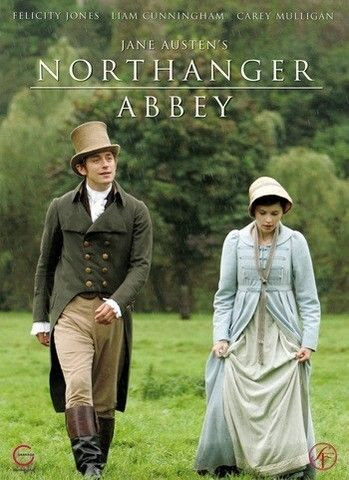
Jane Austen's NORTHANGER ABBEY: Literary Essay


Jane Austen's NORTHANGER ABBEY:  Literary Essay


These are examples of different parts of a literary essay on Jane Austen's Northanger Abbey, written collaboratively by College students in their 2nd Year, as part of their course ENGLISH LITERATURE 1. The aim of this publication is to help students improve their writing and organisation skills by reading their partners' works and sharing theirs. 


Thursday, 24 September 2020

EMMA, by Jane Austen

 Emma, by Jane Austen


Instructions:
1  1.You are going to work in groups of  up to 9 students. Your document must not be more than 2 pages long (A4 , Arial 12, double spacing, justified paragraphs) and must contain 3-4 extracts to illustrate each topic you’re asked to explore.
    2.Cite your sources properly. You’re advised to use the sources already provided to you by your teacher in your booklet. If you use other sources, acknowledge them properly both in your in-text citations and in your references ( at the end of your document). 
       YOUR ANALYSIS SHOULD INCLUDE:  
     1) In INTRODUCTION to introduce what you are analysing, book and author, in one paragraph.
     2) Topic sentences for each paragraph of your analysis to signal what the paragraphs are about.Then an explanation backed up by the extracts.
     3) You must analyse your  topics using the sources provided by me and citing them in your References at the end of your document. The novel should be cited as one of your sources as well.
3    4)You must find  3-4 extracts for each topic, where the main ideas in your analysis are clearly shown. Cite the author whenever you quote from the novel: (Austen 34).
 5)Your document must be 2 pages long (A 4 – ARIAL 12 – double spacing – justified paragraphs).
6) DO NOT  write the extracts alone,  because in that case, there is no actual analysis and your readers won't understand what your analysis is about. 
7) A CONCLUSION to round up ALL your arguments.
8) You can start with a quote pertinent to your area of analysis if you like, before the introduction. 
8    9) Proper heading: 
Instituto Superior del Profesorado Nº 4, Ángel Cárcano
ENGLISH LITERATURE II 
Analysis of Emma, by Jane Austen


        Group members: ___________________

GROUPS: 1) Genre (The Novel of Manners) ; 2) Features of Jane Austen's Style; 3) Themes in Emma (focus on no more than 3 themes).
1-
1-
      You must share your production with me by email on SATURDAY 3rd, OCTOBER - 9:00 AM       DEADLINE for publication in the Blog: THURSDAY 15th, OCTOBER - 08:00 AM


Tuesday, 12 May 2020

THE HOURS , by Michael Cunningham VERSUS MRS DALLOWAY, by Virginia Woolf


 THE HOURS , by Michael Cunningham VERSUS  MRS DALLOWAY, by Virginia Woolf 

Amazon.com: The Hours; Mrs. Dalloway: Michael Cunningham: Books

Instructions:
1    1.Your document must be 2 pages long (A4 , Arial 12, double spacing, justified paragraphs) and must contain at least 2 extracts to illustrate each topic you’re asked to explore.
    2.Cite your sources properly. You’re advised to use the sources already provided to you by your teacher.
      INCLUDE:  
     1) In INTRODUCTION to introduce what you are analysing, book and author, in one paragraph.
     2) Topic sentences for each paragraph of your analysis to signal what the paragraphs are about.Then an explanation backed up by the extracts.
     3) You must analyse your  topics using the sources provided by me and citing them in your References at the end of your document. The novel should be cited as one of your sources as well.
3    4)You must find  2-3 extracts for each topic, where the main ideas in your analysis are clearly shown. Cite the author: (Cunnigham 34).
      5)Your document must be 2 pages long (A 4 – ARIAL 12 – double spacing – justified paragraphs).
     6) DO NOT  write the extracts alone,  because in that case, there is no actual analysis and your readers won't understand what your analysis is about. 
      7) A CONCLUSION to round up ALL your arguments.
      8) You can start with a quote pertinent to your area of analysis if you like, before the introduction. 
8    9) Proper heading: 
Instituto Superior del Profesorado Nº 4, Ángel Cárcano
ENGLISH LITERATURE II 
Analysis of The Hours, by Michael Cunningham
& Mrs Dalloway, by Virginia Woolf

        Group members: ___________________


      3.You must share your production with me by email on MONDAY 25, MAY – 09:00 AM
8.       
       DEADLINE for publication in the Blog: SATURDAY 30, MAY – 09:00 AM

Group 1: Barbara Amherdt, Cecilia Montini, Micaela Valiente, Gabriel Malagueño and Alejandro Sosa
A-Laura Brown and Clarissa Vaughn Versus Clarissa Dalloway
B-Postmodernism in The Hours.

Group 2: Altamirano Leandro, Lodi Malena, Soto, Eleonora, Nuñez, Yanina and Tourn, Luisina.
A-Richard in The Hours Versus Virginia Woolf's Richard Dalloway and Septimus Smith in Mrs Dalloway.
B- Compare and contrast the styles of both writers, Woolf and Cunningham.  

Group 3: Brian Segovia, Micaela Ramirez, Samuel Sager and Nahuel Maglier.
A- Mary Krull Versus Miss Killman
B-Explore the theme of DEATH in the novels.


Thursday, 30 April 2020

THE WOODLANDERS , by Thomas Hardy [English Literature II]


THE WOODLANDERS, by Thomas Hardy [English Literature II]


Thomas Hardy (1840-1928)


Group 1:  Marty South – Setting ( Melina Delbón, Ornela Zorzón & Mariel Spesot)
Group 2: Giles Winterbourne – Style ( Mailén Aguirre, Luciana Mandel, Giuliana Mathiew & Giuliana Vittori).
Group 3: Grace Melbury – Motifs of Fate (Carolina Corti, Cecilia Ely, Mariano Paniagua, Diego Flores & Claudia Scheidegger).


Group 4: Edred Fitzpiers – Naturalism (Noelia Mereles, Alejandra Centurión, Agustina Martínez, Yamila Moschén & Lionela Velázquez).

Group 5: Felice Charmond – Main themes (Paulina Gómez, Ailén Bublitz, Gimena Fernández & Rocío Altamirano).  


INSTRUCTIONS:
You are writing an analysis of a character and themes or a character and Naturalism, etc. This requires:
1) In INTRODUCTION to introduce what you are analysing, book and author, in one paragraph.
2) Topic sentences for each paragraph of your analysis to signal what the paragraphs are about.Then an explanation backed up by the extracts.
You must analyse your 2 topics using the sources provided by me and citing them in your References at the end of your document. The novel should be cited as one of your sources as well.
3- You must find 3 extracts for each topic, where the main ideas in your analysis are clearly shown. Cite the author: (Hardy 34).
4- Your document must be 2 pages long (A 4 – ARIAL 12 – double spacing – justified paragraphs).
5) If you write the extracts alone, there is no actual analysis and your readers won't understand a thing. 
6) A CONCLUSION to round up ALL your arguments.
7) You can start with a quote pertinent to your area of analysis if you like, before the introduction. 
8) Proper heading: 
Instituto Superior del Profesorado Nº 4, Ángel Cárcano
ENGLISH LITERATURE II 
Analysis of The Woodlanders, by Thomas Hardy 

Group members: ___________________


Focus of our analysis: ___________________& ________________ in The Woodlanders.


DEADLINE for submitting the analysis / extracts: Mon 20, May - 08:00 AM


DEADLINE for publication in the BLOG:  Sat 23, May - 12:00 PM

References and Citations: If you are using sources, you are expected to quote them properly, following MLA academic conventions both in your in-text citations and at the end of your post, in your References.


Friday, 7 June 2019

ANGLO-SAXON LITERATURE RECAP [English Literature I]


ANGLO-SAXON LITERATURE  RECAP [English Literature I]
Instructions:
1- Works in groups of 4 students. 
2- Watch the entire video.
3- Comment on what impressed you most or what surprised you most. DO NOT comment on topics other groups have already spoken about. (Click on the link below to access the video in YouTube)

DEADLINE: Thursday 13th, June - 23:00 p.m. 

Friday, 12 April 2019

ANGLO-SAXON LITERATURE: BEOWULF [English Literature I ]


ANGLO-SAXON LITERATURE:  BEOWULF [English Literature I ]


Instructions:
In groups of 3, choose ONE question about the essay by Alexander and compose an answer. You will have to create a GoogleDoc to be able to work together as a group and make your contributions. Once you have your answer ready and checked for mistakes, you copy and paste it into the Blog. You should copy and paste the question first.  At the end of your post, write ALL your names.
I
Bibliography [in your Booklet]: 
Alexander, Michael. Beowulf : A Verse Translation. England: Clays Ltd, St Ives plc, 2003. Pp  
     xiii- xli. Print.
DEADLINE: Fri 19, April, 2019 - 12:00 PM
 (no entries will be evaluated after this time!)

Read the introduction to Beowulf and answer these questions :
1.The Venerable Bede wrote the Historia Ecclesiastica Gentis Anglorum in 731. What do we learn about the Angles there ?
2.How does the name « England » originate ?
3.Does Beowulf have any historical characters ? Who ? What do we know about them ?
4.Who wrote Beowulf, when was it written and what was its inteded audience ? Does the original manuscript survive ?
5.Why did the monks need to translate the gospel into English instead of leaving in Latin like they did in Gaul ? Why is this important for Literature ?
6. What makes Beowulf a remarkable poem ?
7.What is the primary theme of heroic poetry ?
8.What is Beowulf, the protagonist, like ? How is he different from Achilles or Aeneas ?
9.What do these names suggest : Grendel, Bjorn, Heorot, Beowulf ?
10.Beowulf belongs to the epic genre. What are the 4 characteristics of this genre ? Explain them briefly.
11.What do the monsters in the poem symbolise ?
12.Beowulf is different from other epic poems such as Homer’s The Illiad and The Odyssey ? Why ? What is the Ethos of this poem ? ( Ethos : the set of beliefs, ideas, etc. about the social behaviour and relationships of a person or group)
13.What are the monsters and why do they attack ?


Wednesday, 31 October 2018

Wide Sargasso Sea, by Jean Rhys


Wide Sargasso Sea, by Jean Rhys


Work collaboratively in groups and take down notes on the following:

1. What are your initial impressions on the characters in Wise Sargasso Sea? Do they develop through the novel or are they static? If they are developing characters, how do they change and why? Are there any similarities or differences between this set of characters and those of  Jane Eyre?
In your notes, include:
      Traits of personality
      Physical features
      Their philosophical outlooks ( how they see life, love, sex, etc), mannerisms, etc. 
      It’s important to read the descriptions of minor characters below to keep track of who is who in the book.
2.Setting:
    How well does the writer help you to visualise the setting? Make a note of any passages of description which you think are particularly effective in creating a vivid sense of place and time.
   Does the setting seem to be just a background against which the action takes place – for example because it is concerned with historical events or with the interrelationship between people and their environment?  
C   . Can you make any connections between these settings and the ones in Jane Eyre?

3.Themes: What themes seem to be emerging? Can you find a link with those themes in Brontë’s novel?

4.Style:
     Is the story told by a narrator who is also a character in the stories, referring to herself / himself as “I” (first person narrative) or is he/she anonymous and detached from the action (third person narrative)?
    Note down any interesting or striking uses of language, such as powerful words or images which evoke a sense of atmosphere. Compare and contrast them with Brontë’s use of language.
    How is this novel post-modern?

5.Your personal response: Have the novel made you think about or influenced your views on its themes and characters? What have you enjoyed or admired most about the stories ( or least) and why?

6. Length: You are expected to produce a summary of your findings, including all the items you have discussed with your partners in class: characters, setting, themes, style, and your personal responses. Your written production should not exceed 1,500 words.
7. References: As you are going to be using sources on the novel and Post-modernism, quote them properly. Write your References at the end of your production.
. Group members: this information should go at the very beginning of your post.
DEADLINE:  THU 8TH, NOVEMBER, 2018 – 22.00 p.m.


III. KAZUO ISHIGURO’S The Remains of the Day – English Literature III


1. What are your initial impressions on the characters in The Remains of the Day? Do they develop through the novel or are they static? If they are developing characters, how do they change and why? Are there any similarities or differences between this set of characters and those of Ian McEwan’s Atonement and L.P. Hartley’s The Go-Between?
Characters: As you make progress through the pages of this novel, take down notes on all the characters you encounter. In your notes, include:
ü  Traits of personality
ü  Physical features
ü  Their philosophical outlooks, their own countrymen and relatives, love, sex, their place in the world, the place where they are living at the moment, etc.
ü  Gestures, speech, and mannerisms that characterise them.
2.Setting:
ü  How well does the writer help you to visualise the setting? Make a note of any passages of description which you think are particularly effective in creating a vivid sense of place and time.
ü  Does the setting seem to be just a background against which the action takes place – for example because it is concerned with historical events or with the interrelationship between people and their environment? Can you make any connections between these settings and the other two novels we’ve read this year?

3.Themes: What themes seem to be emerging? Can you find links with those themes in Ishiguro’s and Hartley’s novels?
4.Style:
ü  Is the story told by a narrator who is also a character in the stories, referring to herself / himself as “I” (first person narrative) or is he/she anonymous and detached from the action (third person narrative)?
ü  Note down any interesting or striking uses of language, such as powerful words, motifs, metaphors, or images which evoke a sense of atmosphere. Compare and contrast them with Ishiguro’s use of language.
How is Ishiguro's novel post-modern? 
5.Your personal response: Has the novel made you think about or influenced your views on its themes and characters? How has the novel informed your views on the masters and servants in England before WWI? What have you enjoyed or admired most about this novel (or least) and why? In order to give your opinion, use the critical essays on The Remains of the Day to help you say what you want to say. Find information about Kazuo Ishiguro to help you understand his novel better.
6. Sources: Make sure you quote your sources properly and write a References list at the end of your production.
7. Length of your production:  it should not exceed 1,500 words.  
DEADLINE: WED. 7th, NOV. 11.A.M.


IV. GEORGE ORWELL’S Burmese Days – English Literature II

IV. GEORGE ORWELL’S Burmese Days – English Literature II


Activities:
1.    Work collaboratively in groups. 

2.    What are your initial impressions of the characters in Burmese DaysDo they develop through the novel or are they static? If they are developing characters, how do they change and why? Are there any similarities or differences between this set of characters and those of E.M. Forster’s A Passage to India? As you make progress through the pages of this novel, take down notes on all the characters you encounter. 
In your notes, include
  • Traits of personality
  • Physical features
  • Their philosophical outlooks ( how they see life, the “Others” ( in this case, the Burmese), their own countrymen, love, sex, their place in the world, the place where they are living at the moment, etc.
  • Gestures, speech, and mannerisms that characterise them
  • 3.Setting: How well does the writer help you to visualise the setting? Make a note of any descriptive passages which you think are particularly effective in creating a vivid sense of place and time. Does the setting seem to be just a background against which the action takes place – for example, because it is concerned with historical events or with the interrelationship between people and their environment? Can you make any connections between these settings and the ones in A Passage to India? (Even if the novels take place in different countries, India and Burma – now, Myanmar /mjanˈmɑː/ both countries were colonised by the same people and both are in Asia).
4. Themes: What themes seem to be emerging? Can you find links with those themes in Forster’s novel?
5.Style: Is the story told by a narrator who is also a character in the stories, referring to herself/himself as “I” (first person narrative) or is he/she anonymous and detached from the action (third-person narrative)
How is this novel inscribed within MODERNISM? What makes it modern?
Note down any interesting or striking uses of language, such as powerful words, motifs, metaphors, or images which evoke a sense of atmosphere. Compare and contrast them with Forster’s use of language. You will need to re-read the essays on A Passage to India to help you.

      6.Your personal response: 
Has the novel made you think about or influenced your views on its themes and characters? 
How has the novel informed your views on Colonialism and Post-Colonialism? What have you enjoyed or admired most about both novels (or least) and why?
In order to give your opinion, find critical essays on Burmese Days that can help you say what you want to say. Find information about George Orwell to help you understand his bitter satire against the British Empire. The essays on A Passage to India can be useful as well.


Blog: You are expected to write a summary of your findings for the Blog with your group. It should be no longer than 1,500 words. It must include all the items above and quotes from the novel to illustrate your conclusions. 
  • Remember to include REFERENCES, with a list of sources quoted and the names of the members of the group at the end of your post. 
  • Deadline : SAT 10th, NOVEMBER, 2018 - 11:00 A.M. 

Featured post

ENGLISH LITERATURE 1 - "Poetry Makes my Toes Tingle!"

  ENGLISH LITERATURE 1 - "Poetry Makes my Toes Tingle!"     INSTRUCTIONS:      1. Explore the following websites :  https://poetr...